THE NEWCOMER: Introducing a New Puppy
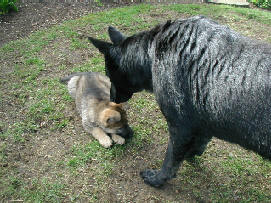
Getting a new puppy is one of the most
exciting times in every dog lover's life. Whether your dogs work for
you or occupy comfortable positions on your couch, the acquisition
of a new canine companion is surrounded by hopes, dreams,
expectations, and the bustle of preparing the household for a new
member.
What if you already have one or more dogs?
Can you insure that the newcomer will be accepted into the "pack"
with a minimum of stress? What can be done to guarantee that this
little fellow's first impression of his new home won't be filled
with bared teeth and hostile growls? And how can you help your
resident dog(s) relax and adapt to the changes that will inevitably
occur in the established routines?
Begin Early
The best defense against the unknown is
often a good offense, and in dogs that means preparation,
preparation, and more preparation.
You can begin long before the actual
arrival date. Since most well-socialized adult dogs have built-in
inhibitions against harming very young pups, it's a good idea to
have the resident meet the puppy while it is still quite young,
away from both dogs' home territories.
If possible, a week or so before the pup
comes home, take your older dog to visit the newcomer. To prevent
jealousy, when the two first greet, the puppy can be held by the
breeder. Before you bring the puppy home, have them meet again at a
park or other neutral location. If you have more than one dog, do
this with each one separately.
Tune Up
Meanwhile, rehearse you leadership with the
resident(s). Make sure that he takes food from you ONLY when you say
"okay." Insist he ALWAYS stop
whatever he's doing when you raise your voice. Spend some time going
over the DROP and WAIT commands in case his obedience skills are
rusty.
Keep your routines as consistent as
possible. The new puppy will take a lot of your time, but don't
neglect the "old" dog's training and play times. Make an effort to
spend extra fun times with him when the puppy is safely snoozing in
its den. He should continue to get special privileges such as rides
in the car or trips to the park by himself. Make sure that he's
getting plenty of exercise and that his diet is adequate to help
combat any stress caused by the new arrival.
Get Ready, Get Set
Before you actually carry the pup over the
threshold, have his own personal space prepared - a crate and
exercise pen - where he can escape and relax from the pressures of
having to adapt to a new lifestyle and family.
Don't expect him to embrace your routines
immediately, especially if he's an older puppy. Give him a place to
eat in peace, and a place where he can enjoy his toys safely. You
can avoid many squabbles over food and possessions if you don't put
a newcomer in the position of having to defend himself right off the
bat.
Thoughtful Leadership
Finally, don't be overly protective.
Preventing adult dogs from properly subordinating a juvenile can
lead to problems down the road. When adolescence hits, an
insubordinate youngster may try to take out the competition and
serious fights can result.
Older dogs should never be allow to harass
or terrorize a pup and vice versa! Use your leadership to enforce
the rules, and chances are good that your pack will be a harmonious
one.
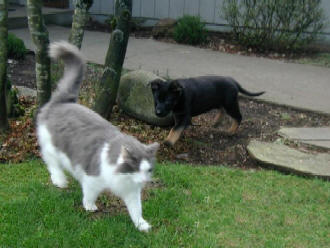
Cats and other small pets should be
introduced to the puppy under supervision. Always be careful not to
let a chase ensue, or you will quickly loose control of the
situation. Aggression on the part of the puppy should be
immediately but gently corrected, and he should be made aware that
the cat or other pet was here first and is to be considered a member
of his future pack. They will more often than not grow to be
fast friends and spend their years together in peace and harmony.
Schraderhaus K9